
Where Did All the Stars Go?
A few weeks ago I stood in Sydney’s inner west and asked a local, more or less at random, whether this counted as a dark sky.
“Yes,” they said.
Fair enough, in a way. The sun had set hours earlier. There was no moon. And overhead, perhaps a dozen of the very brightest stars were hanging on, like the last few guests at a party nobody has told has ended.
The rest of the sky sat in a kind of permanent, low-grade twilight.
It was not a dark sky. It was just the darkest sky they had ever known.
There is a name for what I was looking at: ‘ALAN’ - Artificial Light At Night.
And it has become a genuine problem.
Cities are not the villain here
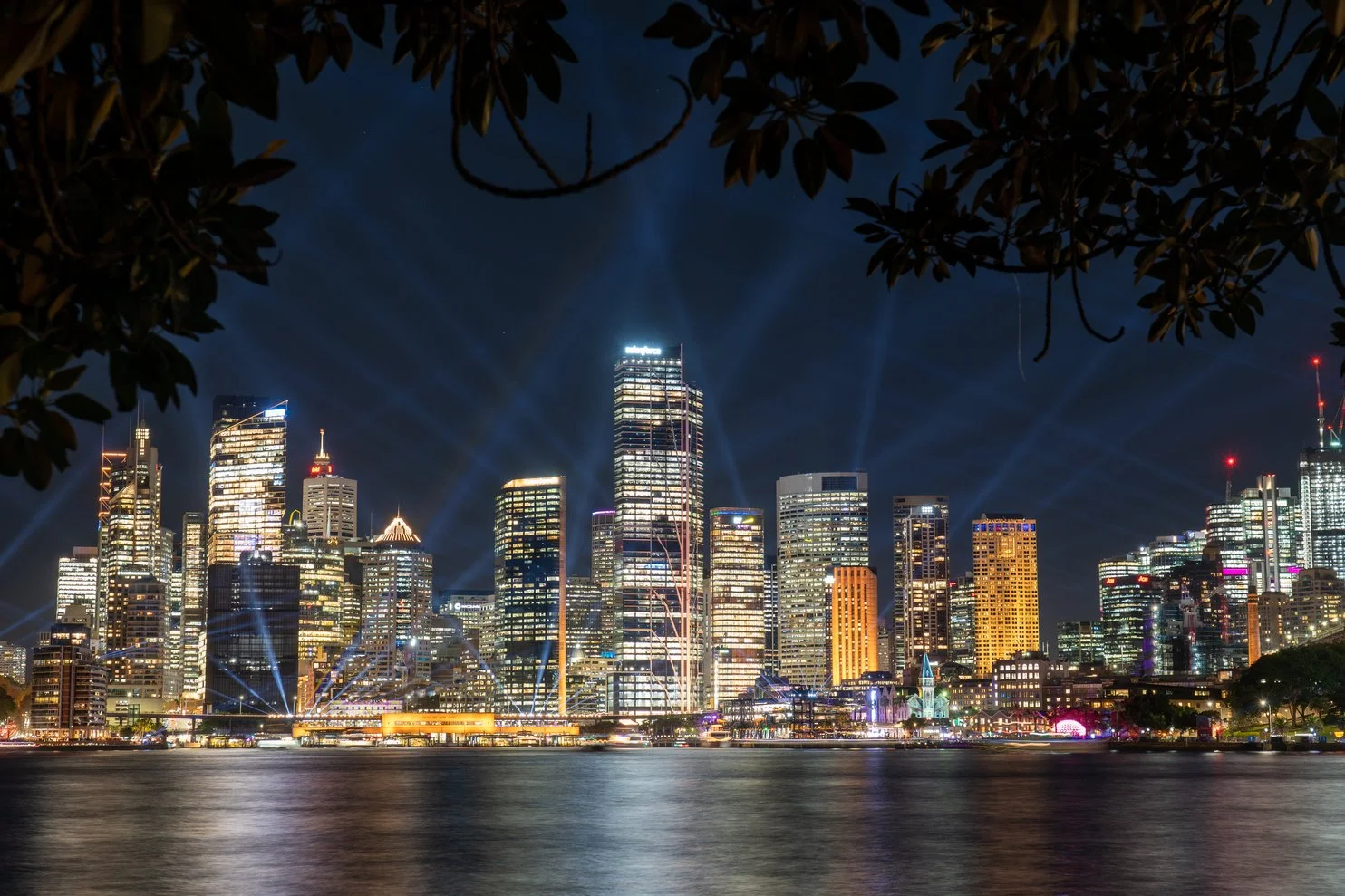
Cities have to exist, and some light at night is unavoidable.
In smaller regional centres the effect is softened, and you do not have to drive far to find real darkness.
But in a big, thriving city, light pollution is profound - and the strangest part is how little anyone notices.
If you live and work within twenty kilometres of a city centre, the sky above you is bright, the distractions are endless, the days are busy, and slowly, without ever deciding to, you stop looking up.
Here is where that ends…
There are now people (plenty of them) who have never seen the stars. Not “haven’t seen them lately”. Never.
They have never watched the Greek heroes, heroines and outright villains of mythology play out overhead in real time. (Books are wonderful. It is not the same.)
They have never had the seasons read to them by the sky - the Indigenous lore that tells you not just what season it is, but what is coming next.
Australia’s First Peoples managed this continent for 65,000 years without a written word, and a great deal of that knowledge is held in the sky.
Deep knowledge of Country, of season, of ecology: all of it is under direct threat when the sky goes blank.
And it is not only us
Plenty of other species are having a worse time of it than we are.
A turtle hatchling breaks out of the sand and heads for the ocean, using the full moon as its guide. A row of beachfront houses with their lights on is all it takes to send it the wrong way.
At least one town on the Mid North Coast of NSW has designed its community lighting to throw light downwards, specifically to reduce the impact on the Shearwater, a nocturnal seabird. On Muttonbird Island there is no lighting of any kind, not even navigational lighting, for the same reason.
Kelp beds are affected too. Add warming oceans on top of that and their mortality increases.
Australia got lucky. That is not the same as being safe
In light pollution terms we have been extraordinarily fortunate in Australia: two major cities in a landmass the size of the contiguous United States.
Pull up any global light map and most of our continent is properly, genuinely black.
But there are a host of smaller cities growing steadily, and every one of them adds to the national light output.
Marnie Ogg, founder of the Australasian DarkSky Alliance, told SBS that we have had “3.8 billion years of natural day, night cycles that were predictable” and then, around 150 years ago, we introduced the electric light and began rewriting the night
Nearly four billion years of routine, undone inside six generations.
Two inventions, one problem
Two things happened here, not one. First the electric light. Then the grid required to run it around the clock, and neither one works without the other.
And it has been a boon for a highly urbanised population.
Activity no longer has to stop when the sun does, especially now that rooftop solar and home batteries keep pushing the cost of running all night downwards.
But we are in real danger of losing our sense of connection permanently, particularly if current plans for so-called “mirror satellites” (orbiting reflectors designed to bounce sunlight back down onto the ground after dark) ever get off the launch pad.
That would not just be the loss of dark sky.
That would be the loss of darkness.
So people are pushing back
Because of all this (or perhaps in spite of it) the ‘dark sky’ movement has grown remarkably quickly.
This year the Outback town of Winton became Queensland’s first International DarkSky Community.
In the hills east of Wagga Wagga, an off-grid, off-line ecohut called ‘Kestrel Nest’ became Australia’s first DarkSky Approved Lodging.
Closer to home, the Warrumbungles have been protected since 2016 and are still the only International DarkSky Park in the Australia
And in June 2026, more than 870 square kilometres of Sunshine Coast hinterland became Queensland’s first International DarkSky Reserve. Similar things are happening overseas.
But why? Why does any of this matter enough for councils to rewrite their lighting policies?
Because we feel it, even when we cannot see it
We are deeply connected to the rest of the universe, and that does not stop being true simply because we no longer get the opportunity to experience it.
The electric light is 150 years old. In that eyeblink it changed everything, allowing human activity to run without pause for the first time. It also lit up the sky and, in the process, threatens to sever something deep and personal.
We tend to forget what we simply cannot see. But this is different.
Over time a disquiet sets in, a gentle nudge, a sense that something is missing and we try to fill the gap with activity and busyness.
The movement is genuine precisely because its roots run that deep into the human spirit.
The view from here
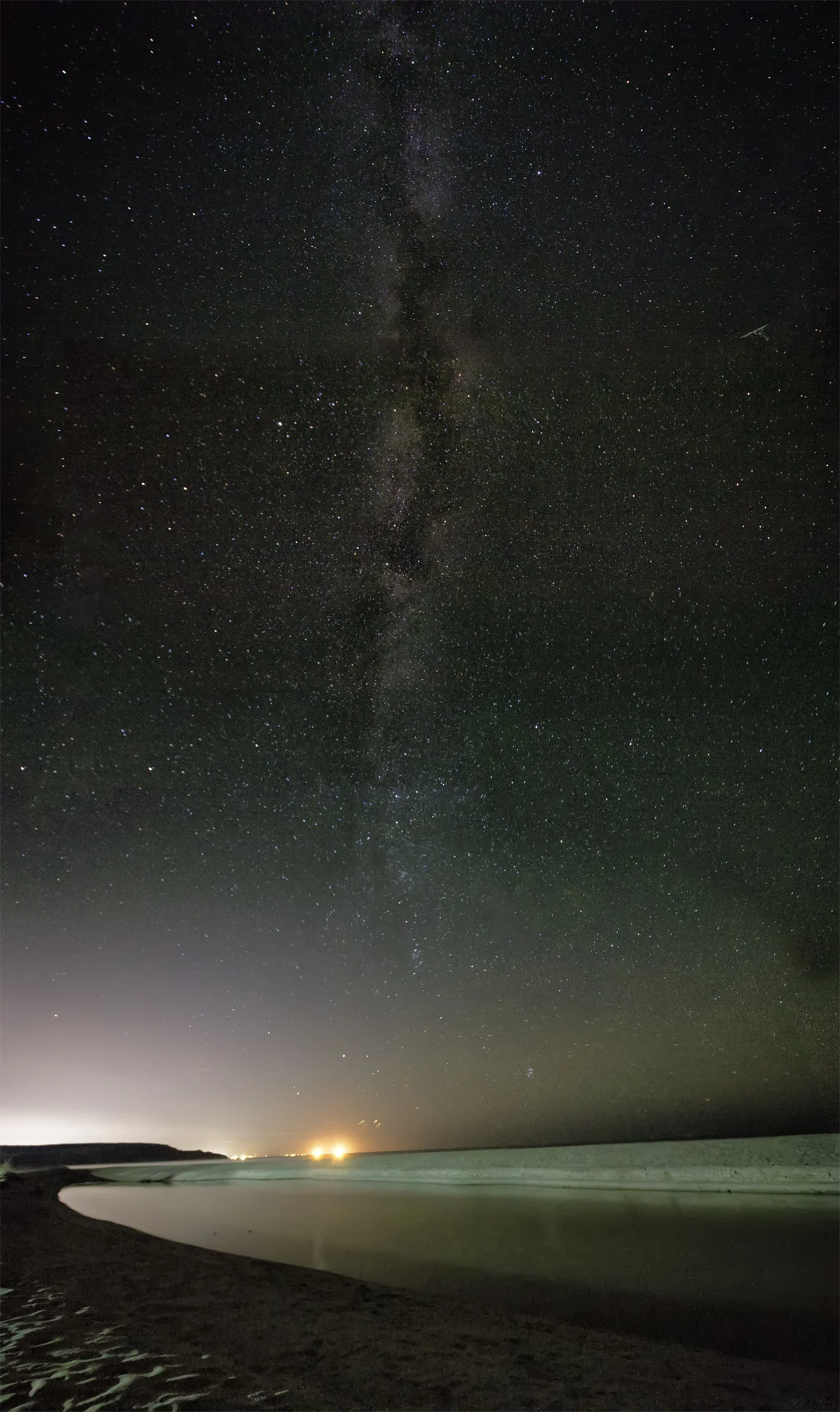
It is a privilege to live in a rural setting with a dark sky overhead, and I am reminded of it every single night.
There is no escape, once seen, from the glory of the Milky Way crossing the heavens, changing its aspect and direction with the seasons as the stars migrate slowly westward, eventually setting with the sun and then reappearing in the morning sky. All stars do this.
But there is something very particular about standing, sitting, or flat-out lying under a dark sky and letting it happen to you.
Consider Palm Beach Headland, at the northern tip of Sydney’s northern beaches. It took a council lighting policy and a formal Urban Night Sky Place designation to protect what it already had, and the work cut light pollution there by 10% in two years. Good outcome. Worth doing.
It also means a headland an hour from the CBD had to be actively defended.
Our ‘Look At Me Now’ Headland in Emerald Beach simply gets on with it, for nothing, every clear night.
Try this
Next time you find yourself in the country, away from the lights, stop. Get out of the car. Look up and do nothing else. Ten minutes. Thirty. An hour.
Some people find it confronting. Some become emotional. Nearly everyone finds it worth the persistence.
And IF you would rather have someone standing next to you explaining what you are actually looking at (particularly if there are children with you, who will ask questions you were not remotely prepared for ) that is the job.
(My job as your Guide to the Night Sky that is)
The school holidays, and our pitch… such as it is
No screens. No wifi. No batteries.
A headland, a very large sky, and someone who knows his way around it.
We run Friday and Saturday nights year-round, and Tuesday through Saturday across the school holidays.
Bring a jumper. Bring the kids. Bring the questions!
Book your Tour Now!
School holidays Tours start Tues Sept 22nd….
